How to Keep a Daily Blood Sugar Log: What Experts Recommend
Being diagnosed with diabetes—or trying to get a better handle on a long-standing diagnosis—often comes with a mountain of advice from doctors, nurses, and dietitians. But almost all endocrinologists agree on one foundational requirement: you must keep a blood sugar log.
Taking your blood sugar without recording it is like driving a car with your eyes closed. You might know your speed for a split second, but you have no idea where you are actually going. But how exactly should you keep this log? We've compiled the top recommendations from leading diabetes experts.
1. Pair Your Readings with Actionable Data
A raw number on its own (for example, "145 mg/dL") tells your doctor very little. To make your log useful, experts recommend pairing that number with the variables that influenced it:
- Time of Day: Did this happen before breakfast or after dinner?
- Carbohydrate Intake: What did you eat prior to the reading?
- Insulin or Medication: How much short-acting insulin did you take to cover the meal?
By recording these factors side-by-side, your healthcare team can easily calculate an accurate insulin-to-carb ratio and adjust your basal rates.
2. The "Pairing" Technique
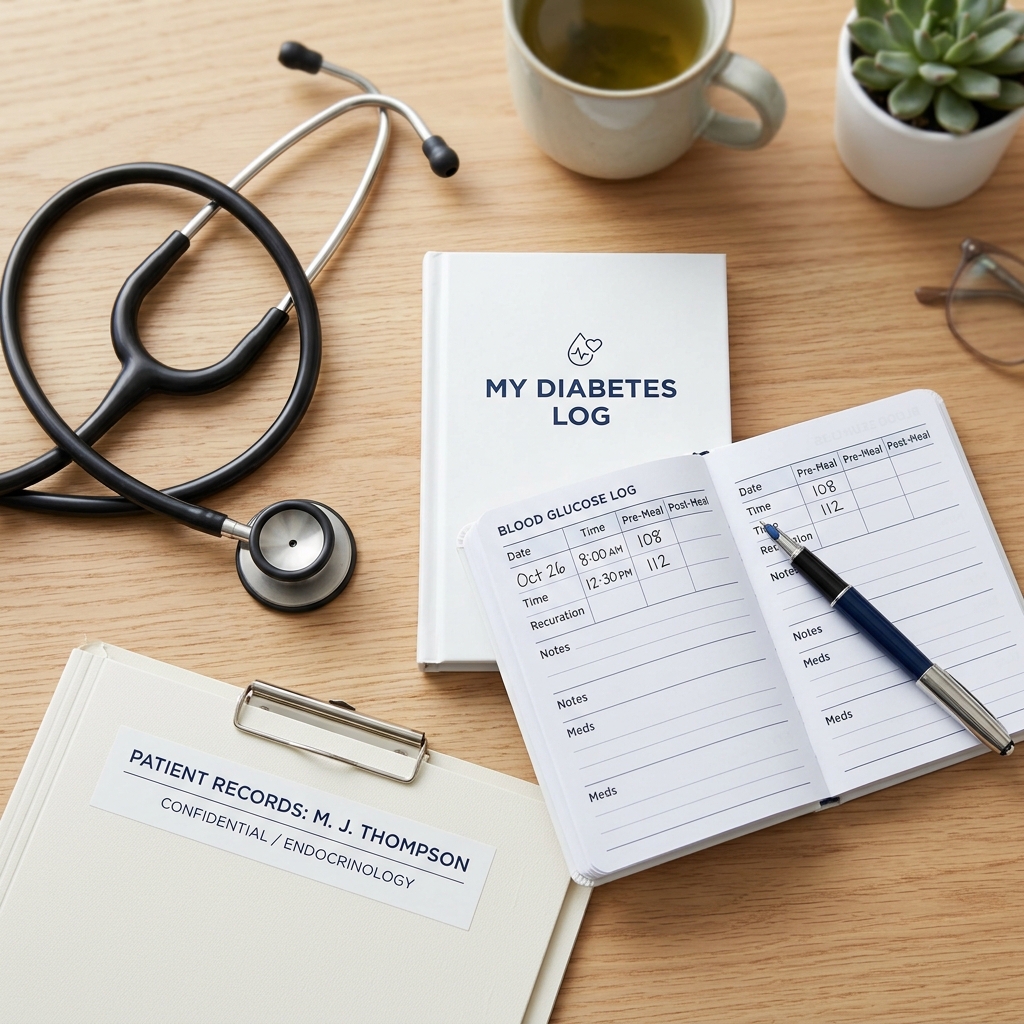
Many diabetes educators recommend the "pairing" technique if checking your blood sugar 6 times a day feels overwhelming. This involves checking your blood sugar immediately before a meal, and then checking it again exactly two hours later. By recording these two numbers together, you see the direct, isolated impact of that specific meal on your system.
3. Analog Over Digital
Surprisingly, many experts and clinics still heavily favor a physical, paper log book over digital apps. An app requires your doctor to take your phone, scroll through menus, and try to piece out patterns on a tiny screen. A physical log book, however, can be laid flat on the examination table. In a 5-second glance at a 2-page spread, a doctor can immediately spot a trend—such as a consistent dip in numbers every Thursday afternoon.
4. Note the Anomalies
Expert endocrinologists want to know about the outliers. If your blood sugar spiked to 250 mg/dL, they want to see a note next to the reading. Was it your birthday? Were you sick with a cold? Did you experience severe stress at work? Having a dedicated "Notes" section prevents your doctor from changing your daily medication dosage based on a one-off, solvable anomaly.
The Expert-Approved Layout
Our Overspire Pocket-Sized Diabetes Log Book was designed specifically to align with expert recommendations. It features dedicated columns for Time, Glucose, Meals (Carbs), and Insulin—all laid out cleanly across a 5-meal daily structure, plus a generous notes section for those vital anomalies.
 View on Amazon (4.6★)