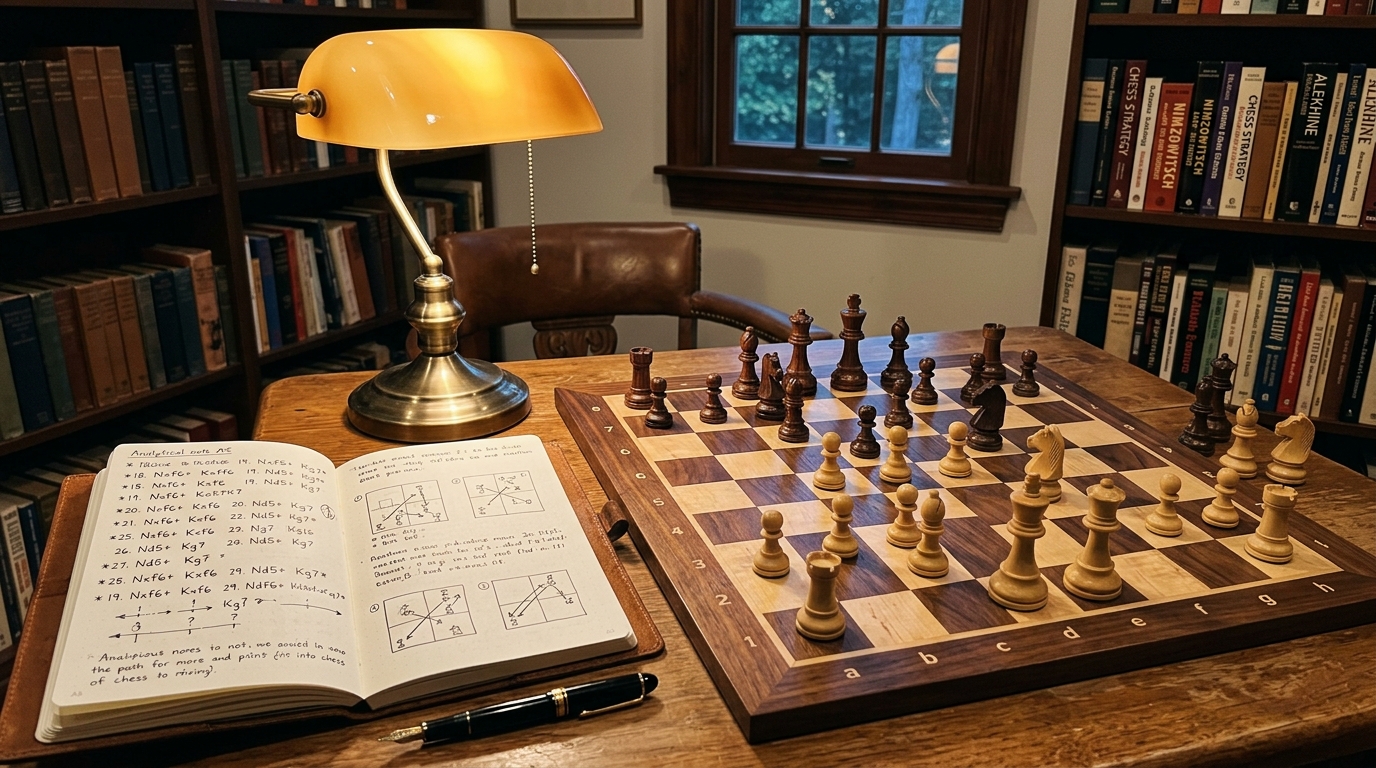
How to Analyze Your Own Chess Games to Improve Your Elo Rating
Former World Champion Garry Kasparov famously noted that what separates grandmasters from club players is not that grandmasters never blunder—it is the rigor with which they analyze their defeats. Most amateur players play hundreds of rapid games online, glance at a computer evaluation bar for ten seconds, and immediately start another game. This creates a plateau.
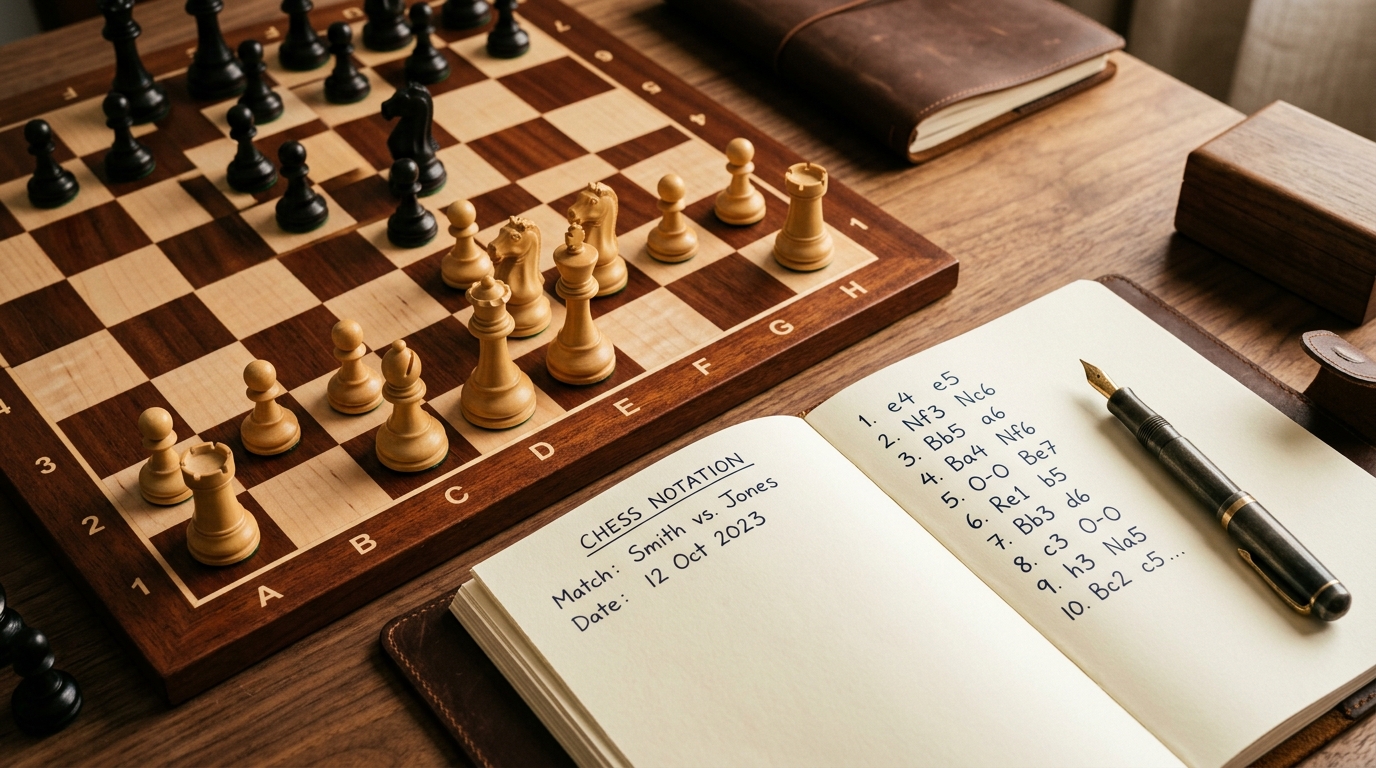
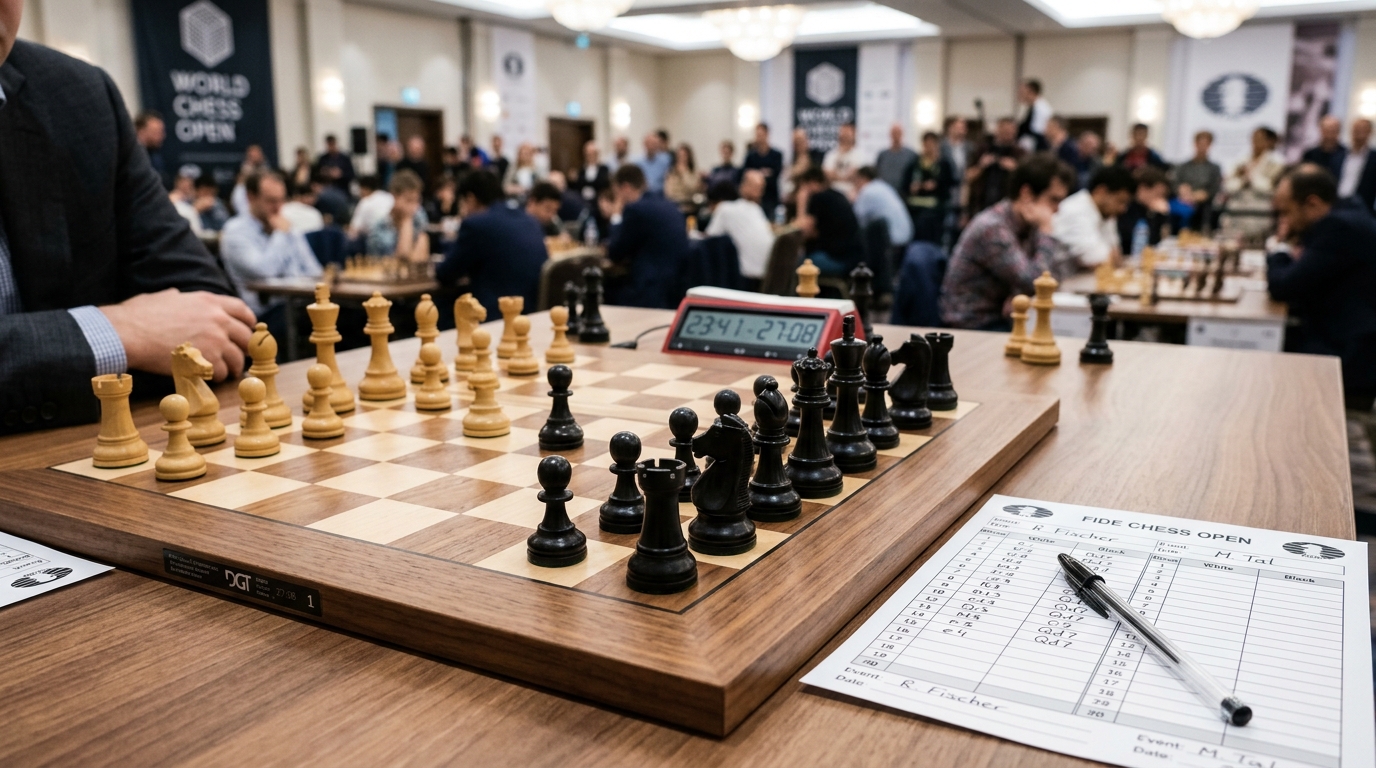
To break through your rating ceiling, you must develop a disciplined post-game analysis routine using your recorded moves in an official chess notation scorebook. Here is the exact step-by-step framework used by chess masters.
Phase 1: The Human Review (Do Not Turn on Stockfish!)
The single biggest mistake club players make is turning on a chess engine the second a game ends. Seeing that move 24 was a -3.4 blunder teaches your brain nothing because you never discovered why you missed the opponent's reply in your own mind.
Step 1: Write Down Your Immediate Impressions
While sitting in the tournament hall or club room immediately after signing the score sheets, take 2–3 minutes to write notes in the dedicated notes section of your scorebook:
- Where did you feel uncomfortable or out of book?
- What was your opponent’s main plan that surprised you?
- Did you suffer from time trouble, hunger, fatigue, or nerves?
Step 2: Identify the Turning Point (The "Critical Moment")
Every game has 1 to 3 pivotal moments where the evaluation swings dramatically. Replay the game on a physical board using your scorebook. Identify the exact move where you felt the initiative slip away. Sketch the position on the empty board diagram included on each score sheet.
Step 3: Calculate Candidate Moves by Hand
At the turning point, ask yourself: "What were my 2 or 3 alternative candidate moves, and why did I discard them?" Write down your variations on paper. This active calculation rebuilds your neural pathways and trains you to see similar tactical motifs in future games.
Phase 2: The Computer Verification
Only after you have formed your own hypotheses should you input the moves into a chess engine (Stockfish, Lichess, or Chess.com analysis board).
Step 4: Check Your Tactical Blind Spots
Compare the engine’s top recommendations with your candidate moves. Where did your calculations diverge? Did you miss an intermediate check (zwischenzug), a quiet prophylactic move, or an unexpected knight fork?
Step 5: Categorize the Root Cause of Each Mistake
Record your errors in one of four distinct categories in your game notes:
- Tactical Oversight (Calculation): You calculated lines, but missed a concrete reply. (Fix: Solve targeted tactical puzzles).
- Positional Misjudgment: You made a strategically bad plan, such as creating isolated pawn weaknesses or exchanging your active bishop. (Fix: Study master games in that pawn structure).
- Opening Deficit: You fell into an unfamiliar opening line by move 7. (Fix: Refine your opening repertoire tree).
- Clock / Psychological Error: You spent 20 minutes on a routine move and blundered in time pressure. (Fix: Practice strict time management pacing).
Summary: The Grandmaster Post-Mortem Routine
| Stage | Tool | Key Activity |
|---|---|---|
| 1. Immediate Post-Mortem | Scorebook notes | Record psychological feelings, time trouble, opening surprises. |
| 2. Board Replay | Physical chess board | Find turning point; sketch position on board diagram. |
| 3. Candidate Calculation | Pen & paper (No engine) | Calculate 2–3 alternative variations manually. |
| 4. Engine Audit | Stockfish / Leela | Verify variations and tag mistake category. |
📊 Track Your Rating Performance: Curious how your tournament results will impact your official rating? Use our free FIDE & USCF Elo Rating Calculator or review official Tournament Score Sheet Rules.
Related Chess Training Guides
Keep a Permanent Record of Your Improvement
Progress happens when you learn from every game you play. The Overspire Chess Score Book was designed specifically with post-game analysis in mind—featuring blank board diagrams, dedicated notes spaces, and 100 tournament sheets.
 View on Amazon ($7.99)