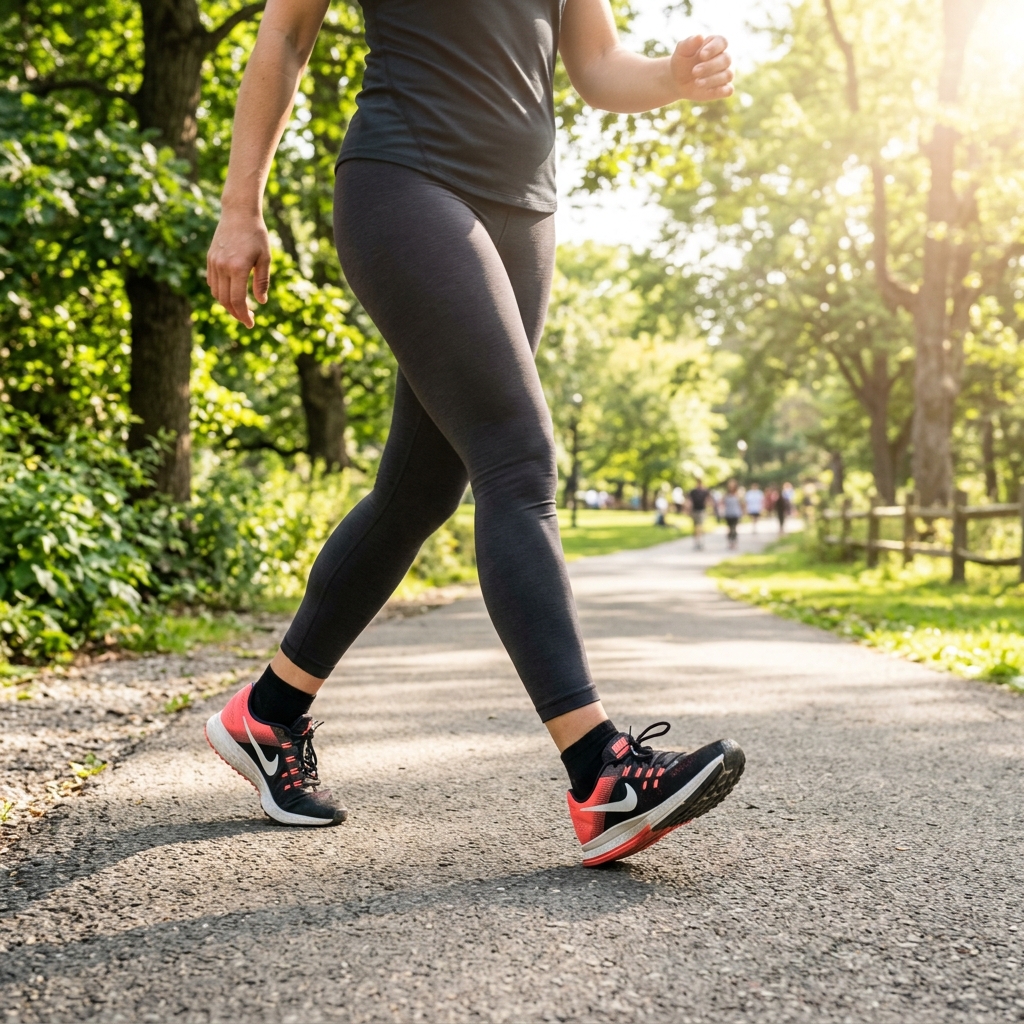
Movement as Medicine — The Exercise That Works Best for Blood Sugar
Articles in this Series (10-Part Guide)
Here is a fact that should change how you think about exercise: a single 10-minute walk taken immediately after a meal lowers blood sugar more effectively than a 30-minute walk taken at any other point in the day.
Not a marathon. Not a gym session. Ten minutes after eating.
A 2025 randomized crossover trial published in Nature Scientific Reports confirmed exactly this — a 10-minute post-meal walk produced a significantly lower peak glucose level (164.3 mg/dL vs. 181.9 mg/dL at rest) and reduced the 2-hour glucose area-under-the-curve compared to a 30-minute walk taken 30 minutes after eating. The study concluded that a brief post-meal walk is "an effective and feasible approach for the management of hyperglycemia."
This article is about exercise as a blood sugar tool — not as a weight loss strategy, not as a fitness goal, but as the body's most immediate and powerful mechanism for disposing of excess glucose. We'll cover exactly how exercise works at the cellular level, which types of movement are most effective, what the research says about timing, how much you actually need, and how to get started whether you've exercised before or not.
Diet and fiber (Articles 2 and 3) control what glucose enters your bloodstream. Exercise controls how fast it leaves.
How Exercise Lowers Blood Sugar — Inside the Cell
Most people understand that exercise burns energy and helps with weight. Fewer know that it operates two entirely separate pathways to lower blood sugar — and one of them completely bypasses the broken insulin system that causes type 2 diabetes.
Pathway 1: Insulin-Independent Glucose Uptake (GLUT4)
During muscle contraction, muscle cells activate transport proteins called GLUT4 (Glucose Transporter Type 4), which migrate from their storage depots inside the cell to the outer cell membrane. Once at the surface, they act as doorways, pulling glucose directly out of the bloodstream and into the muscle cell — no insulin required.
This is the key mechanism that makes exercise so uniquely valuable for people with insulin resistance or type 2 diabetes. Even when insulin signaling is impaired — when the pancreas can't produce enough insulin, or cells no longer respond to it properly — exercise activates GLUT4 through a completely independent pathway, using muscle contraction itself as the trigger.
Exercise in humans increases muscle glucose uptake by up to 100-fold compared with rest. That is not a typo. The magnitude depends on intensity and duration, but even low-intensity walking meaningfully engages this pathway.
Pathway 2: Enhanced Post-Exercise Insulin Sensitivity
After exercise ends, the muscles need to replenish their glycogen (stored glucose). To do this, they remain in a heightened state of insulin sensitivity for up to 24–72 hours after a single session. This means the blood sugar benefit of one workout extends far beyond the workout itself — your cells remain more responsive to insulin through the next day and beyond.
Regular training deepens this benefit. Consistent exercise increases the total amount of GLUT4 protein expressed in muscle cells, creating a permanent improvement in how efficiently the body handles glucose — not just acutely during the workout, but chronically as a baseline state.
Pathway 3: AMPK — The Metabolic Master Switch
Exercise also activates an enzyme called AMPK (AMP-activated protein kinase), often described as the body's metabolic master switch. AMPK is triggered when energy is being used — it promotes fat oxidation, improves mitochondrial function, reduces liver glucose output, and stimulates the same GLUT4 translocation pathway described above.
Both aerobic and resistance training activate AMPK — explaining why both types independently improve blood sugar control through overlapping but distinct mechanisms.
The Post-Meal Walk: The Most Powerful Simple Intervention
Of all the exercise strategies in this article, the post-meal walk deserves special attention. It is the most immediately actionable, requires no equipment, costs nothing, and is backed by some of the most specific and compelling evidence in this field.
Blood sugar peaks approximately 30–90 minutes after eating. A short walk taken immediately after a meal uses the muscles' glucose uptake machinery (GLUT4) at the precise moment when glucose is highest in the bloodstream — essentially intercepting the spike before it reaches its peak.
The evidence is highly specific:
- 2025 Nature Scientific Reports RCT: A randomized crossover trial found that a 10-minute walk immediately after glucose ingestion produced a significantly lower peak glucose (164.3 vs. 181.9 mg/dL) and lower 2-hour glucose area-under-the-curve compared to rest. The 10-minute walk outperformed the 30-minute delayed walk on peak glucose reduction
- *University of Otago / Diabetologia study: 41 patients with type 2 diabetes followed two protocols over two weeks — a 30-minute walk once daily vs. three 10-minute walks after each main meal. Post-meal walking reduced overall blood sugar by 12% more, with a 22% greater reduction* specifically after the evening meal
- ScienceDirect controlled trial: Confirmed that post-dinner walking outperforms pre-dinner exercise for reducing the glycemic effect of the meal in people with type 2 diabetes
- PMC 2022 controlled study: Confirmed the post-meal walking effect across meals with different macronutrient compositions — the benefit holds regardless of what you ate
Why is the evening meal particularly important? Because dinner is typically the largest, most carbohydrate-rich meal of the day — and it is followed by the longest period of sedentary time (sitting and sleeping). A post-dinner walk intercepts that spike at its most consequential moment.
The single most impactful change you can make starting today: Take a 10-minute walk after every main meal. No gym required.
Types of Exercise and Their Blood Sugar Effects
Not all exercise affects blood sugar in the same way. Here is how the major categories compare:
| Exercise Type | Immediate Effect | Long-Term Effect | Best For |
|---|---|---|---|
| Walking / Low-intensity cardio | Lowers blood sugar during and after; especially powerful post-meal | Moderate HbA1c improvement over time | Everyone; no equipment; post-meal use |
| Moderate aerobic (cycling, swimming, jogging) | Strong immediate glucose drop | Significant HbA1c and insulin sensitivity improvement | Those able to sustain 30–60 minute sessions |
| HIIT (high-intensity intervals) | May briefly raise glucose (adrenaline effect), then sharp drop | Comparable or superior long-term benefits to steady-state cardio in less time | Time-pressed individuals; intermediate+ fitness |
| Resistance training (weights, bodyweight) | Brief glucose rise possible, then sustained drop | Builds muscle mass = larger glucose disposal capacity; durable insulin sensitivity gains | Everyone; especially powerful long-term |
| Combined aerobic + resistance | Engages both GLUT4 and muscle-building pathways simultaneously | Synergistic — greater HbA1c reduction than either alone | Optimal approach for diabetes management |
The American Diabetes Association recommends at least 150 minutes of moderate-intensity aerobic exercise per week, plus 2–3 resistance training sessions per week. Critically, they also recommend no more than 2 consecutive days without exercise — this is the point at which the post-exercise insulin sensitivity gains begin to diminish.
The Case for Resistance Training
Most blood sugar conversations focus on cardio — walking, cycling, swimming. Resistance training deserves equal attention, and is often the more powerful long-term strategy.
Muscle tissue is the largest site of glucose disposal in the body. The more muscle mass you have, the larger your body's glucose "sink" — the capacity to absorb and store blood sugar after meals. Building muscle through resistance training effectively expands that sink permanently.
A 10-week controlled trial comparing resistance exercise to treadmill (aerobic) exercise in adults with type 2 diabetes found that resistance training reduced HbA1c significantly — in some measures outperforming aerobic training. An 8-week circuit training program combining both aerobic and resistance exercise improved HbA1c, fasting blood glucose, lean body mass, and cardiorespiratory fitness simultaneously.
A 2024 PMC review of combined training confirmed the synergistic effect: structured aerobic plus resistance training together produces greater improvements in glucose homeostasis, systemic inflammation, and cardiovascular function than either modality alone.
Practical guidance for resistance training: - Beginners: bodyweight squats, lunges, push-ups, and planks 2–3 times per week require no gym - Intermediate: add dumbbells, resistance bands, or machines at a gym - When combining both in one session: do resistance training first, then cardio — this order produces better overall glucose management
HIIT: Maximum Benefit in Minimum Time
High-Intensity Interval Training (HIIT) alternates short bursts of near-maximum effort with recovery periods — for example, 30 seconds of fast cycling followed by 90 seconds of slow pedaling, repeated 8–10 times. A 2025 comparative study published in PMC found that combined aerobic-resistance training and HIIT both produced significant improvements in HbA1c and patient-reported outcomes in type 2 diabetes, with HIIT offering comparable benefits in considerably less total exercise time.
One important caveat: intense exercise can temporarily raise blood sugar before lowering it. During high-intensity effort, adrenaline (epinephrine) triggers the liver to release stored glucose for immediate energy — producing a short-term spike. This is normal and resolves within 1–2 hours as glucose is cleared. People who monitor blood glucose may notice this and mistake it for a problem. It isn't — the net 24-hour effect is still a reduction in glucose.
HIIT is best introduced gradually, particularly for people who are new to exercise or managing cardiovascular complications alongside diabetes.
How Much Exercise Is Enough? The Practical Minimums
The evidence-based minimum from the ADA and major diabetes organisations:
- 150 minutes of moderate-intensity aerobic activity per week (e.g. brisk walking, cycling, swimming) — equivalent to 30 minutes, 5 days per week
- 2–3 resistance training sessions per week, targeting all major muscle groups
- No more than 2 consecutive days without any movement — beyond this, insulin sensitivity gains begin to reverse
But even before reaching these targets, smaller amounts produce meaningful results:
- A single 10-minute post-meal walk reduces peak blood glucose by a statistically significant amount
- Breaking up prolonged sitting with 2–3 minutes of movement every 30 minutes reduces post-meal glucose compared to uninterrupted sitting
- Michigan State University research found that 15 minutes of walking after a meal decreases type 2 diabetes risk and keeps blood sugar balanced
The message for anyone starting from zero: start with post-meal walks. Three 10-minute walks per day after meals adds up to 210 minutes per week — already exceeding the ADA's aerobic minimum — without a single gym visit.
Morning Exercise: A Special Case
Fasting morning exercise — movement done before breakfast — draws on stored glycogen for fuel rather than glucose currently in the bloodstream. For people with elevated fasting glucose (a common problem in prediabetes and type 2 diabetes), a 20–30 minute morning walk or light resistance session before eating can be particularly effective at lowering the morning glucose reading.
This doesn't mean morning is the only useful time — post-meal timing has its own specific advantage as described above. The best approach combines both: morning movement to address fasting glucose, and post-meal walks to manage the day's glucose spikes.
Staying Consistent: Practical Tips
The most effective exercise programme is the one you actually do. Here are evidence-based strategies for building and maintaining consistency:
- Anchor post-meal walks to meals — tie the habit directly to something you already do every day. Shoes by the door. A 10-minute alarm after dinner. These reduce friction to near zero
- Don't break the 2-day rule — if you miss one day, make sure the next day includes movement. More than 2 consecutive rest days begins to erode insulin sensitivity gains
- Track your glucose response — if you have a glucometer or CGM (continuous glucose monitor), check your glucose before and 1 hour after different types of exercise. Seeing the direct impact is highly motivating
- Involve someone else — post-meal family walks, a gym partner, or a scheduled class dramatically improve consistency over solo exercise intentions
A Safety Note: Exercise and Medication
For people managing diabetes with insulin or sulfonylureas, exercise carries a risk of hypoglycaemia (low blood sugar) — because exercise lowers blood glucose through additional mechanisms on top of the medication. Key precautions:
- Always carry a fast-acting glucose source (glucose tablets, fruit juice, regular soda) when exercising
- Check blood glucose before starting if on insulin
- Avoid exercising at peak insulin action times without prior medical guidance
- If you are new to exercise and on medication, consult your healthcare provider before significantly increasing intensity or duration
These precautions are straightforward and should not deter anyone — they simply require awareness. The risk of complications from physical inactivity far exceeds the managed risk of hypoglycaemia in people who exercise carefully.
Putting It Into Practice
Three changes — in order of accessibility — will produce the most immediate blood sugar benefit:
Exercise is not optional for blood sugar management — it is one of the few interventions that works immediately, works independently of diet, works even when insulin signaling is compromised, and compounds in benefit the more consistently it is applied.
Sources
Take Control with a Daily Log Book
Whether you're managing diabetes or reversing prediabetes, logging your levels daily is essential. Our Pocket-Sized Diabetes Log Book gives you the structure you need with a doctor-approved format.
 View on Amazon (4.6★)
Sources
- American Diabetes Association — Blood Glucose and Exercise (2024).
- American Diabetes Association — Physical Activity/Exercise and Diabetes: A Position Statement (2016).
- PubMed / NIH — Exercise, GLUT4, and Skeletal Muscle Glucose Uptake (2013).
- PubMed / NIH — Is GLUT4 Translocation the Answer to Exercise-Stimulated Muscle Glucose Uptake? (2021).
- PMC / NIH — Update on the Effects of Physical Activity on Insulin Sensitivity (2017).
- PMC / NIH — The Effect and Mechanism of Regular Exercise on Improving Insulin Resistance (2025).
- Nature Scientific Reports — Positive Impact of a 10-Min Walk Immediately After Glucose Intake on Postprandial Glucose Levels (2025).
- EurekaAlert / University of Otago — Short Walks After Meals May Prove Important Tool in Managing Diabetes .
- ScienceDirect — Postprandial Walking is Better for Lowering the Glycemic Effect of Dinner than Pre-Dinner Exercise in Type 2 Diabetic Individuals (2009).
- PMC / NIH — The Effects of Postprandial Walking on the Glucose Response After Meals (2022).
- PMC / NIH — Resistance Exercise Training Lowers HbA1c More Than Aerobic Training in Adults With Type 2 Diabetes (2009).
- PubMed / NIH — Combined Aerobic and Resistance Exercise Improves Glycemic Control and Fitness in Type 2 Diabetes (2002).
- PMC / NIH — Effects of Combined Aerobic and Resistance Training on Glucose Homeostasis (2024).
- PMC / NIH — Comparative Effects of Combined Aerobic-Resistance Training vs. HIIT in Type 2 Diabetes (2025).
- Michigan State University Extension — Walking for 15 Minutes After a Meal May Provide the Best Benefit (2025).
- VeryWell Health — What Happens to Your Blood Sugar Levels When You Exercise Regularly *(medically reviewed, 2025)*.
- Mayo Clinic — Diabetes Management: How Lifestyle and Daily Routine Affect Blood Sugar (2026).