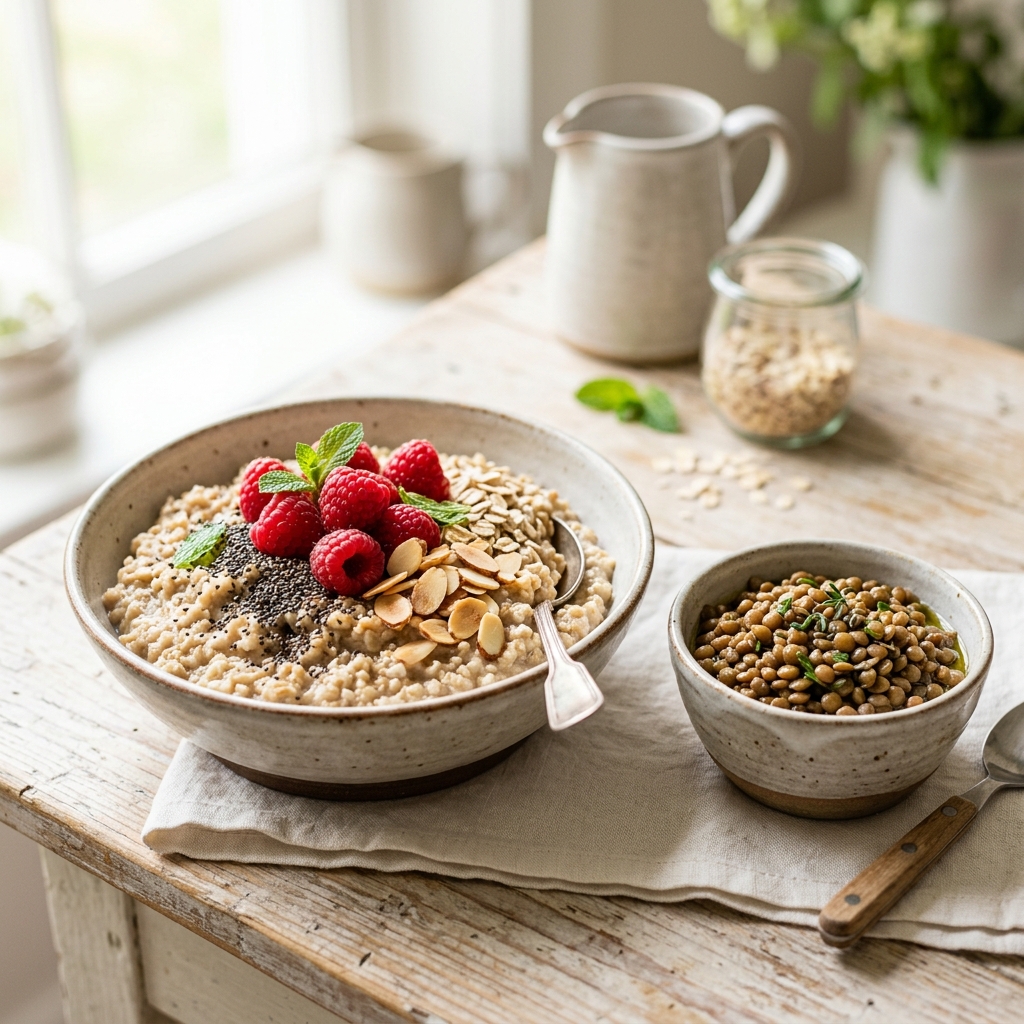
The Power of Fiber — One Ingredient That Changes Everything
Articles in this Series (10-Part Guide)
Picture two people eating the same breakfast — same bowl size, same number of carbohydrates, same calories. One hour later, one person's blood sugar has spiked and crashed, leaving them hungry and foggy. The other's glucose has risen gently and steadily, still stable two hours later. They feel full. They feel sharp. What's the difference?
Fiber.
Most people think of fiber as "the thing that keeps you regular." That's true, but it's only a small part of the story. Fiber's effects on blood sugar, insulin sensitivity, cholesterol, gut health, and even body weight are backed by decades of peer-reviewed research — and its absence from the modern diet may be one of the most underappreciated drivers of metabolic dysfunction.
This article covers what fiber actually is, how it works in the body, the critical difference between its two main types, what the research says, how much you actually need (and how far short most people fall), and the best foods to add to your daily routine to close that gap.
What Fiber Actually Is
Fiber is a type of carbohydrate found exclusively in plant foods. Unlike every other carbohydrate, the human body cannot digest or absorb it. It travels through the stomach and small intestine largely intact — and this is exactly what makes it so valuable.
Because fiber doesn't get broken down into glucose, it does not raise blood sugar . In fact, fiber in a meal actively works against glucose spikes by slowing the digestion of the carbohydrates alongside it. A high-fiber meal and a low-fiber meal can contain identical grams of carbohydrate, yet produce dramatically different blood sugar responses.
Fiber also feeds the trillions of bacteria that live in the large intestine — collectively known as the gut microbiome. When fiber is fermented by gut bacteria, it produces compounds called short-chain fatty acids (SCFAs), including butyrate, propionate, and acetate. These signal the gut and pancreas in ways that directly improve insulin sensitivity and reduce systemic inflammation — benefits that extend far beyond simple digestion.
Two Types of Fiber — and Why Both Matter
Not all fiber behaves the same way in the body. Understanding the difference between the two main types helps explain which foods to prioritize for blood sugar control specifically.
Soluble Fiber
Soluble fiber dissolves in water and forms a thick, gel-like substance in the digestive tract. This gel is the mechanism behind most of fiber's blood sugar benefits. It physically coats the walls of the intestine, slowing the rate at which glucose is absorbed into the bloodstream. Food moves more slowly from the stomach into the small intestine — a process called delayed gastric emptying — meaning glucose enters the blood more gradually, producing a lower, flatter post-meal glucose curve.
Soluble fiber also traps cholesterol molecules in the digestive tract, reducing LDL ("bad") cholesterol — a particularly relevant benefit given that cardiovascular disease is the leading cause of death among people with diabetes.
Key food sources of soluble fiber: oats, barley, lentils, chickpeas, black beans, apples, pears, citrus fruits, carrots, avocados, chia seeds, flaxseeds, and psyllium husk.
Insoluble Fiber
Insoluble fiber does not dissolve in water. Instead, it adds bulk to stool and speeds up transit through the digestive system — the type primarily responsible for digestive regularity. While its direct impact on blood sugar is more modest than soluble fiber's, insoluble fiber plays an important role in blood sugar management indirectly: it supports healthy body weight, reduces constipation (which affects glucose metabolism), and contributes to the overall fiber intake that has been linked to lower type 2 diabetes risk.
Key food sources of insoluble fiber: whole wheat, wheat bran, brown rice, corn bran, nuts, seeds, and the skin of fruits and vegetables like apples, potatoes, and zucchini.
Which Type Wins?
For direct blood sugar control, soluble fiber has the stronger and more immediate effect . But both types are needed, and most high-fiber whole foods — lentils, oats, apples — naturally contain both in varying ratios. The practical takeaway is simple: don't stress about categorizing your fiber intake. Eat a wide variety of high-fiber whole plant foods, and you'll get meaningful amounts of both.
What the Research Actually Shows
The evidence behind fiber and blood sugar is not preliminary — it is robust, consistent, and spans decades of clinical research.
Meta-analysis evidence (ScienceDirect, 2021): A systematic review and meta-analysis of controlled trials found that dietary fiber significantly reduces both HbA1c and fasting blood glucose in patients with type 2 diabetes. Fiber intake was also negatively correlated with fasting insulin and insulin resistance as measured by HOMA-IR — meaning higher fiber intake was directly associated with improved insulin sensitivity.
Oat beta-glucan and post-meal glucose (PubMed meta-analysis, 2021): A comprehensive meta-analysis of 103 controlled feeding trials involving 538 participants found that oat beta-glucan — the soluble fiber found in oats and barley — reduced post-meal blood glucose area-under-the-curve by an average of 23% and glucose peak rise by 28% . This effect was consistent across both diabetic and non-diabetic participants, with high certainty of evidence.
Second-meal benefit (randomized trial, 2025): A randomized dose-response study published in 2025 found that oat beta-glucans consumed at breakfast didn't just improve post-breakfast glucose — they also enhanced glycaemic regulation after a subsequent lunch eaten 3.5 hours later. This "second-meal effect" suggests that morning fiber intake creates a metabolic advantage that extends well into the afternoon.
Whole grains and diabetes management (PMC, 2020): A review published in Nutrition Bulletin confirmed that higher-fiber diets produce significant improvements in glycaemic control, blood lipids, and body weight in people with diabetes, reinforcing dietary fiber as a core component of evidence-based diabetes management.
The picture that emerges from the totality of research is clear: increasing fiber intake is one of the most consistently supported dietary strategies for improving blood sugar markers — and it works both acutely (within hours) and chronically (over months via HbA1c reduction).
How Much Fiber Do You Actually Need?
Current dietary guidelines in the United States recommend 14 grams of fiber per 1,000 calories consumed — roughly 22–34 grams per day for most adults. The UK's Scientific Advisory Committee on Nutrition (SACN) recommends 30 grams per day for adults aged 16 and over.
The American Diabetes Association's nutrition guidance specifically recommends aiming for 6–8 grams of soluble fiber per day as a targeted goal for blood sugar management.
Here's where it gets stark: the average adult in Western countries currently consumes only about 15–20 grams of fiber per day . That's roughly half the recommended amount. Most people are not even close to where they need to be — which means the majority of the population is missing out on one of the most accessible and evidence-backed metabolic tools available.
The Best High-Fiber Foods for Blood Sugar
These are the foods with the strongest combination of fiber content, soluble fiber fraction, and direct blood sugar evidence:
| Food | Fiber per Serving | Fiber Type | Blood Sugar Relevance |
|---|---|---|---|
| Oats, steel-cut (1 cup cooked) | ~4g | Soluble (beta-glucan) | Reduces post-meal glucose peak by up to 28% |
| Lentils (½ cup cooked) | ~8g | Soluble + insoluble | Directly lowers HbA1c and fasting glucose |
| Black beans (½ cup cooked) | ~8g | Soluble + insoluble | Slows digestion, reduces insulin demand |
| Navy beans (½ cup cooked) | ~10g | Soluble + insoluble | One of highest fiber legumes available |
| Raspberries / blackberries (1 cup) | ~8g | Soluble + insoluble | High fiber, low GI, anti-inflammatory polyphenols |
| Avocado (1 medium) | ~10g | Mostly soluble | Slows gastric emptying, supports satiety |
| Chia seeds (2 tbsp) | ~10g | Mostly soluble | Forms gel in gut, blunts glucose absorption |
| Psyllium husk (1 tbsp) | ~5g | Soluble | One of the most concentrated soluble fiber sources |
| Apple with skin (1 medium) | ~5g | Mixed | Pectin (soluble) slows digestion; keep skin on |
| Broccoli (1 cup cooked) | ~5g | Mixed | Low GI, anti-inflammatory, versatile |
| Barley (1 cup cooked) | ~6g | Soluble (beta-glucan) | Same mechanism as oats; strong evidence base |
| Pear with skin (1 medium) | ~6g | Mixed | High pectin content; skin doubles fiber contribution |
How to Add More Fiber to Your Day — Practically
Knowing the theory is easy. Building consistent habits around fiber is where most people struggle. Here are practical strategies that require no drastic dietary overhaul:
Start the day with fiber: Add a tablespoon of ground flaxseed or chia seeds to your oats, yogurt, or smoothie. A bowl of steel-cut oats alone can deliver 4–5g of soluble fiber before 9am.
Make legumes a weekly habit: Aim to include lentils, chickpeas, or beans in at least three meals per week — in soups, stews, curries, or salads. Half a cup of cooked lentils adds 8 grams of fiber to any meal.
Keep the skin on: The skin of apples, pears, potatoes, zucchini, and cucumbers contains a significant portion of total fiber. Peeling removes it. This is one of the easiest, zero-effort fiber upgrades available.
Swap your grain defaults: Replace white bread with wholemeal or seeded varieties, white rice with brown rice or barley, and regular pasta with wholegrain alternatives. Read labels and look for "wholegrain" or "wholemeal" as the first ingredient .
Snack strategically: Swap crackers and processed snacks for a handful of almonds, an apple, oat cakes, or yogurt with berries. All are significantly higher in fiber than most packaged snack foods.
One critical warning — increase fiber gradually: Jumping from 15g to 30g of fiber overnight almost always causes bloating, gas, and digestive discomfort. The gut microbiome needs time to adapt. Increase your intake by approximately 5 grams per week, and critically — drink more water alongside it. Fiber requires water to do its job properly; without adequate hydration, it can worsen constipation rather than help it.
What About Fiber Supplements?
Whole food sources of fiber are always preferable — they deliver fiber alongside vitamins, minerals, antioxidants, and polyphenols that no supplement can fully replicate. That said, supplements have a legitimate role as a top-up tool for people who struggle to meet their targets through diet alone.
Psyllium husk (the active ingredient in products like Metamucil) is the most clinically studied fiber supplement, with solid evidence for reducing both post-meal blood glucose and LDL cholesterol. Psyllium husk is almost entirely soluble fiber and has been shown in multiple trials to improve glycaemic control in type 2 diabetes.
Inulin and fructooligosaccharides (FOS) — found in chicory root and many prebiotic supplements — are fermented by gut bacteria into SCFAs, supporting microbiome diversity and insulin sensitivity over time.
The rule of thumb: use supplements to bridge gaps, not replace whole plant foods. A psyllium supplement added to a diet already high in whole grains and legumes is a meaningful boost. A psyllium supplement added to a diet of refined foods, sugary drinks, and processed snacks is not a substitute strategy.
Fiber, Your Gut, and Insulin Sensitivity
Beyond slowing digestion, fiber's most profound metabolic effects happen in the large intestine — and understanding them changes how you think about why fiber matters.
When soluble fiber reaches the colon, gut bacteria ferment it and produce short-chain fatty acids (SCFAs), primarily butyrate, propionate, and acetate. These compounds do several things critical for blood sugar:
- Stimulate GLP-1 secretion — a gut hormone that triggers insulin release from the pancreas and suppresses glucagon (which raises blood sugar). This is the same pathway targeted by the popular diabetes drug class GLP-1 receptor agonists (like semaglutide)
- Reduce systemic inflammation — chronic low-grade inflammation is a driver of insulin resistance; SCFAs help suppress it
- Strengthen the gut barrier — a compromised gut lining allows bacterial endotoxins into the bloodstream, triggering inflammation and worsening insulin resistance
Higher fiber intake is consistently associated with a more diverse gut microbiome. And microbiome diversity, in turn, is one of the strongest predictors of healthy insulin sensitivity — independent of body weight, calorie intake, or other dietary factors.
This means fiber's benefit for blood sugar isn't just mechanical (slowing glucose absorption). It's systemic — reshaping the hormonal and inflammatory environment in ways that improve how every cell in the body responds to insulin.
A Sample High-Fiber Day
Here's what 28–30g of fiber looks like across a realistic, enjoyable day of eating:
| Meal | Food | Approx. Fiber |
|---|---|---|
| Breakfast | Steel-cut oats with 1 tbsp ground flaxseed + ½ cup raspberries | ~10g |
| Mid-morning | 1 apple with skin + small handful of almonds | ~6g |
| Lunch | Large salad with ½ cup chickpeas, avocado, mixed greens, olive oil | ~9g |
| Dinner | Lentil and vegetable soup + slice wholegrain bread | ~12g |
| Total | ~37g |
This is not a restrictive or unusual eating pattern — it's built entirely from foods available in any supermarket, requiring no specialist ingredients or complex preparation.
Putting It Into Practice
Three immediate changes will have the biggest impact on fiber intake:
Fiber is not a miracle. But among the natural strategies for blood sugar management, it comes closer to one than almost anything else. It's inexpensive, universally available, backed by decades of clinical evidence, and profoundly underused.
Sources
Take Control with a Daily Log Book
Whether you're managing diabetes or reversing prediabetes, logging your levels daily is essential. Our Pocket-Sized Diabetes Log Book gives you the structure you need with a doctor-approved format.
 View on Amazon (4.6★)
Sources
- NIH / PubMed — The Effect of Oat β-Glucan on Postprandial Blood Glucose and Insulin Responses: A Systematic Review and Meta-Analysis (2021).
- NIH / PubMed — Oat Beta-Glucans Consumed at Breakfast Improve Glucose Tolerance Acutely and After a Subsequent Lunch (2025).
- ScienceDirect — Effects of Dietary Fiber on Glycemic Control and Insulin Sensitivity in Patients with Type 2 Diabetes (2021).
- PMC / NIH — Dietary Fibre and Whole Grains in Diabetes Management (2020).
- PMC / NIH — Therapeutic Effects of Soluble Dietary Fiber Consumption on Type 2 Diabetes (2016).
- PMC / NIH — Dietary Fiber Influence on Overall Health (2024).
- PMC / NIH — Fibre Intake for Optimal Health: How Can Healthcare Professionals Support People to Reach Dietary Recommendations? (2022).
- CDC — Fiber: The Carb That Helps You Manage Diabetes (2024).
- Mayo Clinic — Dietary Fiber: Essential for a Healthy Diet (2026).
- Mayo Clinic — Chart of High-Fiber Foods (2026).
- Diabetes UK — Fibre and Diabetes *(medically reviewed)*.
- NHS (UK) — How to Get More Fibre Into Your Diet (2022).
- American Diabetes Association Diabetes Food Hub — Facts About Fiber (2025).
- News-Medical.net — How Different Types of Fiber Improve Blood Sugar Control and Metabolic Health (2026).
- Artinci — Soluble vs. Insoluble Fiber: Which Is Better for Diabetes Management? (2025).